
Our Acute Care (AC) Pediatric Nurse Practitioner (PNP) Doctor of Nursing Practice (DNP) program prepares you as a population expert in caring for children with critical, complex illness or injury in a continuum of care from disease prevention to critical care.
The AC PNP stabilizes patients, prevents complications, restores and maintains maximum health, and provides palliative and end-of-life care.
Through this program, you'll prepare to provide advanced, comprehensive, holistic, family-centered care.
Patients may be characterized as physiologically unstable, experiencing life-threatening illness or injury, medically fragile, technologically dependent or vulnerable to complications.
You’ll also be prepared to sit for the CPNP-AC exam of the Pediatric Nursing Certification Board.


Our approach to training Acute Care Pediatric Nurse Practitioners
You’ll learn from nationally known faculty from across the country who are experienced in the care of ill and injured children.
We offer tracks for both bachelor’s and master’s-prepared nurses (APRNs and non-APRNs).
Online Pediatric Acute Care Nurse Practitioner DNP program length and location
Our program is designed for graduate students following planned programs of study. It is based on cohorts and is offered part-time.
The program takes three and two-thirds years to complete for students with bachelor’s degrees.
Students with master’s degrees generally complete the program in two to three years. Your program length may vary depending on a gap analysis and if your master’s degree is in an APRN population such as family nurse practitioner.
Most coursework takes place online and is asynchronous. Distance learning is available in many locales, but it is not available in every hospital or state.
Contact the program director if you live outside the Chicago metro area.
A clinical practicum is required. ou will also make the following periodic campus visits:
- Optional one-day university new-student orientation. Program orientation is provided virtually and recorded for those new students unable to attend.
- A two- to three-day visit for the Doctor of Nursing Practice proposal presentation
- A two- to three-day visit in final term for Doctor of Nursing Practice final presentation
Certification
After program completion, you are eligible for the following:
- Certification as a certified pediatric nurse practitioner—acute care (CPNP-AC) by the Pediatric Nursing Certification Board
- State licensure or certification where available
Program tuition
We know your education is a big investment. We want to make sure you have all the information you need to make the best financial decisions for you and your family.
Tuition for the Acute Care Pediatric Nurse Practitioner DNP program is $1,493 per credit hour.
-

Since earning her DNP at Rush, Kacee Logsdon, DNP, CPNP-AC is now a heart transplant nurse practitioner at Children’s Hospital Colorado in Aurora, Colorado. She credits the AC PNP program with preparing her for both direct patient care and quality improvement initiatives.
-
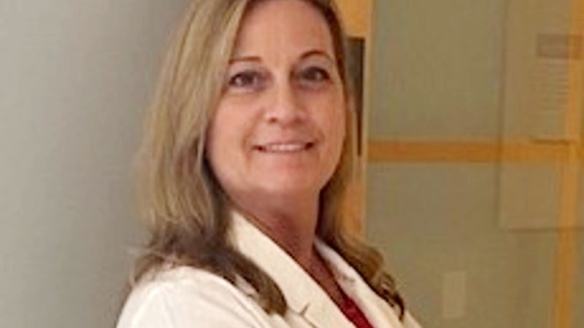
Entering the DNP program as a pediatric nurse practitioner with many years of experience, Jan Dudley, DNP, MHA, CPNP-AC/PC found a caring faculty who assigned clinical placements to match her clinical interests and professional development goals.
What career opportunities are available for Acute Care Pediatric Nurse Practitioner DNP graduates?
Program graduates work with patients and their families within a continuum of care ranging from disease prevention to critical care.
They work independently as providers, specialty service consultants and as members of interprofessional teams in a variety of settings, including the following:
- Acute care home services
- Critical care
- Emergency care
- Inpatient units
- Specialty clinics
- Specialty services
- Transport teams
Employment of nurse practitioners is projected to grow by 40% from 2024-34, according to the U.S. Bureau of Labor Statistics, making it among the fastest growing occupations.
 College of NursingDirector, Acute Care Pediatric NP ProgramDepartment of Women, Children and Family Nursing
 College of NursingAssistant ProfessorDepartment of Women, Children and Family Nursing
 College of Nursing
 College of NursingAssistant Director, Acute Care Pediatric NP ProgramDepartment of Women, Children and Family Nursing
 College of NursingAdjunct Associate ProfessorDepartment of Women, Children and Family Nursing
 College of NursingProfessorDepartment of Women, Children and Family Nursing
Elizabeth Miranda
Admissions Specialist
elizabeth_m_miranda@rush.edu
(312) 942-6986
Learn about upcoming sessions and events in your field of interest.