
Leadership Competencies That Define Graduate Success
Our HSM master’s program is aligned with the nationally recognized National Center for Healthcare Leadership (NCHL) Health Leadership Competency Model. This evidence-based framework defines the leadership knowledge, skills, and behaviors required for effective health system leadership today and in the future.
Throughout the program, students progressively develop proficiency across seven leadership domains, encompassing 28 core competencies. All graduates are expected to meet proficiency standards in each domain prior to graduation, ensuring they are prepared to lead in complex, real-world health environments.
By graduation, HSM students are able to:
- Lead cross-functional and interorganizational initiatives that improve health system performance
- Apply financial, operational, and data-driven decision-making in complex healthcare environments
- Communicate clearly and persuasively with diverse stakeholders
- Build, lead, and develop high-performing teams
- Navigate organizational change with strategic insight and ethical judgment
- Demonstrate professional values, self-awareness, and commitment to lifelong leadership development
NCHL Health Leadership Competency Model
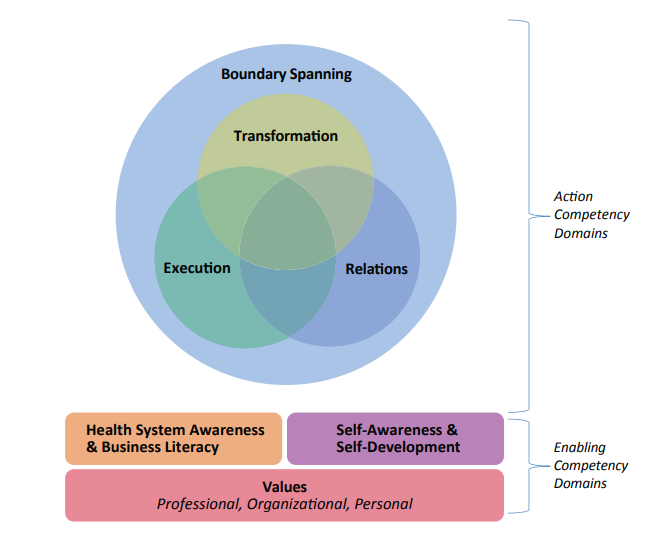
Action Competency Domains
(What health leaders do in practice)
Boundary Spanning
Optimizing relationships across departments, organizations, and communities.
- Community Collaboration
- Organizational Awareness
- Relationship & Network Development
Execution
Translating strategy into effective organizational performance.
- Accountability
- Achievement Orientation
- Analytical Thinking
- ommunication Skills – Writing
- Communication Skills – Speaking & Facilitating
- Initiative
- Performance Measurement
- Process & Quality Improvement
- Project Management
Relations
Creating inclusive, high-performing teams and organizational climates.
- Collaboration
- Impact & Influence
- Interpersonal Understanding
- Talent Development
- Team Leadership
Transformation
Leading change, innovation, and long-term strategic direction.
- Change Leadership
- Information Seeking
- Innovation
- Strategic Orientation
Enabling Competency Domains
(What leaders bring to their role)
Values
Using personal, professional, and organizational values to guide decisions.
- Professional & Social Responsibility
Health System Awareness & Business Literacy
Understanding the healthcare environment and its operational drivers.
- Financial Skills
- Human Resource Management
- Information Technology Management
Self-Awareness & Self-Development
Ongoing development of leadership effectiveness and well-being.
- Self-Awareness
- Self-Confidence
- Well-Being