
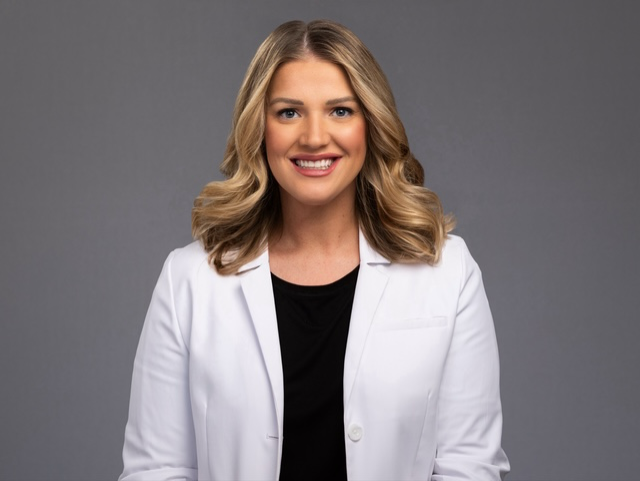
Meet Maria Rusnaczyk, APP, Comprehensive Stroke Program
Where did you grow up?
I was born in Poland and grew up in northwest Chicago.
What drew you to this field, and how did you get started?
I worked as a Neuro ICU nurse at Loyola. During my time in the Neuro ICU, I obtained my SCRN certification, which developed my interest in stroke. While working in the ER at RUMC, I collaborated with the stroke coordinator at the time, Deb Lynch, to start a ED Stroke Committee to aid with stroke education and preparation for the Stroke Joint Commission.
Explain your role and what you do on a day-to-day basis?
As a Stroke APP, I work with the residents and attending to overlook the stroke list and manage the primary patients on 12W. Our day starts at 6:30am, we chart check the list and see assigned patients. Then we table round at 8:30am, after which we round together on the patients as a team. At 12pm, I attend Multiple Disciplinary Rounds with therapies and case management to address patient disposition and barriers. After rounds, the APPs work on notes, plans and prep patients for discharge. We round again at 2pm to discuss updates, new developments and potential discharges.
What’s your favorite part of your job?
Collaborating with the stroke team consisting of APPs, residents, interns, fellows and attendings.
What part of your job would surprise people?
I think people would be surprised by how fast paced and multidisciplinary stroke care is. Small changes in a patient’s neurological status can have significant impact on their care, so staying alert, communicating effectively, and anticipating next steps in care are essential.
What aspects of Rush make you proud to work at Rush?
I am especially proud to be part of an organization where patient care, education, research, and service to the community are all interconnected.
What is one major thing you learned about our team culture?
At Rush, I have seen how different members of the team bring their own expertise and perspectives to provide the best possible care for our patients. I have also learned that a strong team culture goes beyond clinical knowledge- it is about communication, mutual respect, and providing support when needed.
What advice would you give to someone starting in a similar role?
My advice would be to stay curious, ask questions, and never stop learning. Be confident in what you know, recognize when you need support, and take every opportunity to learn from each patient and experience.
What are you reading, watching, or listening to right now?
I am part of a book club; we recently finished The Wedding People, which I really enjoyed. Not watching anything new currently, however I do enjoy watching reruns of comfort shows such as Friends and Gilmore Girls.