
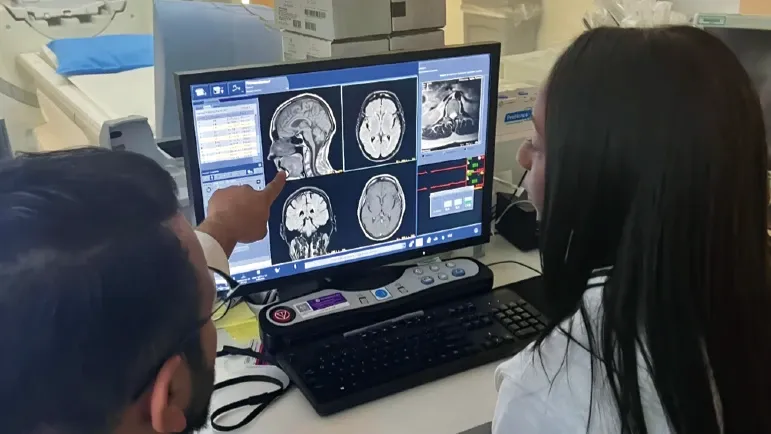
Completing a year of clinical rotations is essential for undergraduates in Rush’s Imaging Sciences and Diagnostic Medical Sonography (formerly Vascular Ultrasound) programs to gain valuable, real-world experience and make strong impressions that often lead to job offers. Meanwhile, students in the Bachelor of Science in Health Sciences program at Rush benefit from an entire semester of rotations with different types of practitioners throughout Chicago, which helps them find their calling and build their network.
“Our undergraduate programs stand out because of our commitment to providing high-quality clinical experiences,” says Mary Jo Guglielmo, MPH, assistant dean and director of undergraduate studies, College of Health Sciences.
“The experience gave me the kind of independence that I was craving.”
– Martyna Cudzich, BS, RVT, 2024 vascular ultrasound grad
Student learns art and science of imaging
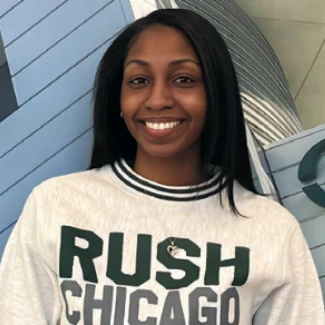
“I’ve loved clinicals, and I realized when I started them last May that I had picked the right field for sure,” says Jada Thorne, a second-year imaging sciences student who grew up in the southern suburbs of Chicago. Before enrolling at Rush, she was a medical assistant and an insurance agent.
During her clinical rotations at Rush South Loop, Thorne has trained under senior MRI technologists like Sufiyan Patel. “In addition to learning how to do routine and special exams, I am also seeing behind the scenes when Sufiyan needs to adjust a protocol,” Thorne says. “I feel very fortunate to sit with him and see that.”
Beyond helping her gain experience with different scanner manufacturers, the clinical rotations have also enabled Thorne to strengthen her interpersonal skills, such as compassion and sensitivity, as patients can oftentimes feel anxious or emotional before and during an MRI.
Grad found calling through clinicals
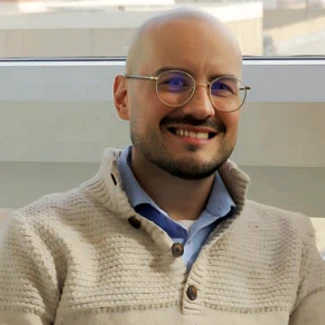
“There’s so many opportunities at Rush to explore different roles,” says Marcos Montes, BSHS, an academic and career development coach with the College of Health Sciences. He supports undergraduates at Rush by helping them develop the skills they need to juggle work, school and life.
Exploring different roles during his practicum rotations was ultimately what drove Montes to pivot from his original plans to apply to PA school after earning his bachelor’s in health sciences from Rush. During one rotation, he shadowed a nurse practitioner who supported the mental health needs of high school students on Chicago’s West Side. It became the “a-ha moment” that sparked his interest in earning his psychology degree and working with youth. “I realized that this was my calling,” says Montes, who grew up in Humboldt Park.
This year, Montes will complete his master’s in counseling psychology from the Chicago School of Professional Psychology.
Clinicals built confidence for grad
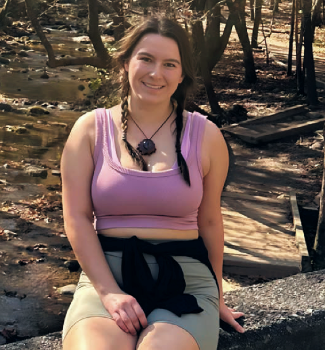
Martyna Cudzich, BS, RVT, believes having a bachelor’s degree in vascular ultrasound from Rush, rather than an associate’s degree from another school, gives her an edge. “It gives me an advantage when it comes to progressing in my career and potentially getting into a managerial role,” says Cudzich, who emigrated from Poland with her family in 2002 and grew up in Orland Park, Ill.
Having a full year of clinicals, during which she scanned patients for 40 hours a week, was another plus. “You have an instructor that you work with on a day-to-day basis, and it’s just a very enriching experience,” she says. “That made me so much more confident when I started my first job.”
She completed her first two clinical rotations in Illinois, followed by six months in Knoxville, Tenn. It marked the first time Cudzich lived away from home, and her living expenses were defrayed with a stipend from Rush. “The experience gave me the kind of independence that I was craving, and I got to see a cool new place and meet new people,” she says.
Cudzich earned her bachelor’s in vascular ultrasound in 2024 and now works at Rush performing a variety of vascular ultrasounds. She is mastering the specialty of transcranial Dopplers, a type of brain scan that checks for critical post-stroke complications involving the vessels in the brain. “I’m really happy where I’m at now,” she says.