
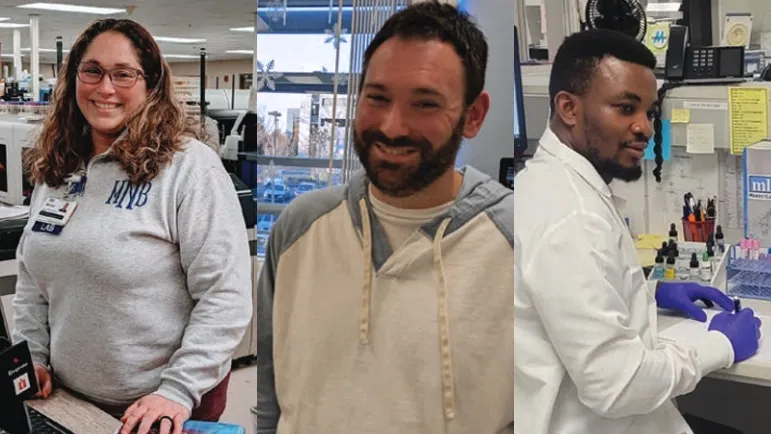
While working on the bench, Melody Boudreaux Nelson, DCLS, MS, MLS(ASCP)CM realized that if she wanted to set herself apart when leadership positions in the laboratory became available, she needed to be proactive and fill her knowledge gaps. To take the next step in her career, she enrolled in Rush’s online Master of Science degree in Clinical Laboratory Management (CLM) program.
“Education is the best way to dive into material and expand your knowledge base because it’s a safe space,” Nelson says.
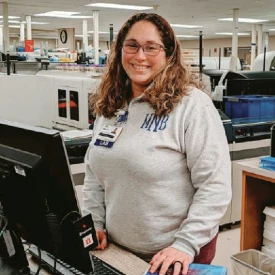
After receiving her master’s degree from Rush in 2019, Nelson landed her first role as an operational manager supervising 45 staff at a Kansas hospital. One of her first responsibilities was reviewing a proposal for laboratory services at a new medical office building. “I was able to look at it critically and understand it, which was a big win — and that came from my education,” she says.
In 2023, Nelson earned her doctorate in clinical laboratory science. Today, she is the principal clinical laboratory scientist at the University of Kansas Health System, where she collaborates with multidisciplinary teams to implement best practices and quality improvement initiatives.
Nelson credits Rush’s CLM program with giving her the ability to see how decisions in the laboratory affect other departments. “It really helped me develop a process for how I handle new situations and opportunities,” she says.
A deep dive into scientific writing and ethics
Matt Hukill, MBS, MS, MLS, SBB, a reference technologist for the American Red Cross in Durham, N.C., recommends Rush’s CLM program to aspiring laboratory leaders for the knowledge it provides as well as the networking opportunities.
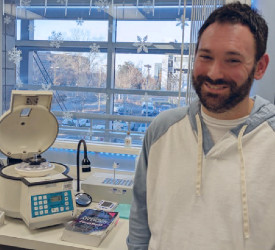
“The program is 1,000 percent worth it, especially if you’re looking to go into management or a leadership role of any kind,” says Hukill, who earned his master’s degree in 2022 and supervised seven staff at a different company. He says the program prepared him for situations, such as hiring and promoting staff, that he never would have encountered as a regular bench technologist. When navigating issues with personnel, he often applies what he learned from his ethics course at Rush.
Another valuable course for Hukill was on scientific writing, which helped him hone his ability to develop and update standard operating procedures. In addition, his solid writing skills allow him to earn extra income creating continuing education courses for another company.
From budgeting to managing
Thompson Akinbolaji, MS, MLS(ASCP)CM SBBCM, a lead reference laboratory technologist at the American Red Cross Immunohematology Reference Lab in Douglasville, Ga., chose Rush because it offers both the Specialist in Blood Bank Technology and the Master of Science in Clinical Laboratory Management online programs.
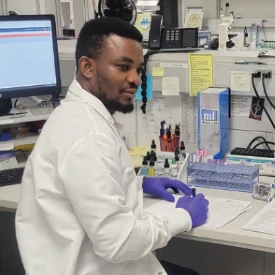
During his CLM studies, he especially valued courses on budget preparation, test methodology/equipment validation, compliance and managing employees. “The Rush CLM program has all it takes to equip and prepare you for the laboratory leadership role, starting from supervisor to manager and director,” says Akinbolaji, who earned his master’s degree in 2023 and now oversees six staff.
Complexity demands leadership
“The regulatory aspects of the laboratory are increasingly complex, and we need leaders who can understand them, so the laboratory is run efficiently, economically and ethically,” says Maribeth Flaws, PhD, MLS(ASCP)CM SM, SI, chairperson of the Department of Medical Laboratory Science and CLM program director.
“The program is 1,000 percent worth it, especially if you’re looking to go into management or a leadership role of any kind."
Rush faculty continually update the CLM curriculum to reflect evolving industry guidelines and trends. “Our faculty are experienced medical laboratory scientists who bring their real-life work experience to the classroom,” Flaws says. “This helps us ensure that what our students learn is relevant to their jobs from day one of the program.”