
We have many Educational and Professional Tracks as part of our Internal Medicine Curriculum. These are optional and serve as longitudinal learning experiences for residents to engage in
-
Health Equity Track
Overview
The Health Equity track was created to provide exposure to global and local health equity issues, encompassing the idea that "Global is Local". The purpose of the track is to empower residents with the knowledge, skills, and experiences they can use to advocate for health equity throughout their careers. The track provides a supportive environment through which residents can collaborate with Rush service initiatives, research, and community partners, both locally and globally.
Mission
To train culturally competent and humble physicians to identify health disparities in the patient population and communities they serve with the goal of improving health outcomes and eliminating health inequities, both locally and globally.
Learning Objectives
- Establish an understanding of the health inequities faced by individuals locally on Chicago's West Side and globally in the Dominican Republic.
- Create a supportive environment that fosters and promotes discussion of topics relevant to Health Equity, including but not limited to Advocacy, Implicit Bias, and Social Determinants of Health.
- Equip residents with the practical tools and knowledge to engage in experiential learning and service in under-resourced settings.
- Promote participation in educational activities including journal clubs and lecture series.
- Provide mentorship throughout the duration of the track, including completion of scholarly activity.
Eligibility
Residents will be enrolled in the track after their PGY-1 year. PGY-1 residents will have the opportunity to apply for the track in February of their PGY-1 year, selections will be made shortly after. PGY-1 residents also have the option of requesting a Health Equity elective during their PGY-1 year. Participation in a Health Equity elective during PGY-1 year does not impact eligibility or selection for the track.
Curriculum Outline and Experiential Learning Opportunities
The Health Equity Track provides residents with a longitudinal curriculum that combines experiential learning, critical thinking and discussion, and scholarly work focused on health equity.
Residents participate in quarterly curriculum meetings and experiential learning opportunities throughout the track, providing dedicated space to explore topics related to health equity and apply their learning in meaningful settings.
The curriculum includes dedicated time for immersive track experiences:
- PGY-2 and PGY-3 years of the track: Two two-week dedicated blocks each year
Experiential learning is a key component of the Health Equity Track. Residents can tailor their experience during their two week blocks to their individual interests, either by working with several different partners for broad exposure or by focusing more deeply on a specific area of health equity.
A longitudinal partner community experience is also a component of the track. Residents will spend approximately a half-day every six weeks with their partner organization, allowing them to build meaningful relationships, better understand community priorities, and contribute more consistently to the needs of our community partner organizations.
Over the course of the track, residents will also engage in scholarly activity, allowing them to explore an area of interest and contribute to ongoing work in health equity.
Community Health
Rush has a strong commitment to the West Side of Chicago stemming from a deep desire to improve the health and well-being of our surrounding communities. The Rush Anchor Mission Strategy outlines the efforts aimed at reducing the social, economic, and environmental inequities faced by individuals living on the West Side. Inspiration is drawn from this commitment to provide Track residents with the opportunity to engage with our community partners in a meaningful and bidirectional fashion.
Global Health
Health care providers from Rush have been supporting and assisting local communities in the Dominican Republic to establish and sustain public health and medical services for over seventeen years. Interprofessional teams travel quarterly, with opportunities for residents to participate in one-week primary care and surgical experiences alongside colleagues from medicine, pediatrics, surgery, nursing, physical therapy, and pharmacy.
Rush partners with the non-governmental organization Community Empowerment, whose mission is to work with local leadership in underserved communities to provide essential health care, while fostering the development of self-sustaining health care systems.
Residents interested in pursuing global health experiences in other locations, must first have the experience vetted and approved by the Program Director. Rush strives to provide scholarships to help offset travel expenses for residents. For non-track residents interested in a global health experience, a one-time two-week Global Health Elective is available.
Current Experiential Learning Opportunities
Residents have the option to pursue experiences that align with their interests and career goals. Current opportunities span a range of clinical, community, and public health settings, including:
- In-home primary care visits
- Global health
- Mobile medical care
- Department of Public health
- Correctional medicine
- Food insecurity
- Community violence intervention and outreach
- Substance use disorder care
- LGBTQ+ care
- Homelessness and housing insecurity
- Health informatics
Residents as Health Equity Advocates
Health Equity Track residents have completed scholarly projects addressing a broad range of local and global health equity topics, including:
- Assessing barriers to global health research
- Exploring causes of vaginal discharge in a rural Haitian community
- Screening for depression and associated factors in communities in the Dominican Republic
- Using WhatsApp-based education to improve blood pressure control
- Conducting a needs assessment in a new partner community in the Dominican Republic
- Improving diabetes education and disease control through a quality improvement initiative in the Dominican Republic
- Developing COVID-19 screening efforts for individuals experiencing homelessness
- Coordinating wound care training for community violence intervention workers
- Conducting needs assessments for community-based organizations
- Developing recipes and nutritional resources for a clinic-based food pantry
- Providing hypertension and coronary artery calcium screening on the West Side of Chicago
Rush and Health Equity
- Division of Community and Global Health Equity at Rush University
- RUSH@Home
- Rush in the Community
- Rush Office of Community Health Equity and Engagement
- Rush Center for Community Health Equity
- RUSH BMO Institute for Health Equity
Health Equity Leadership
Leader Headshot Chief, Division of Community and Global Health Equity
Image
Jennifer Towbin, MD
Co-Director, Health Equity TrackImage
Octavio A. Vega, MD
Co-Director, Health Equity TrackImage
Photo gallery
The gallery below includes photos from our recent trips to the Dominican Republic and Haiti.
Image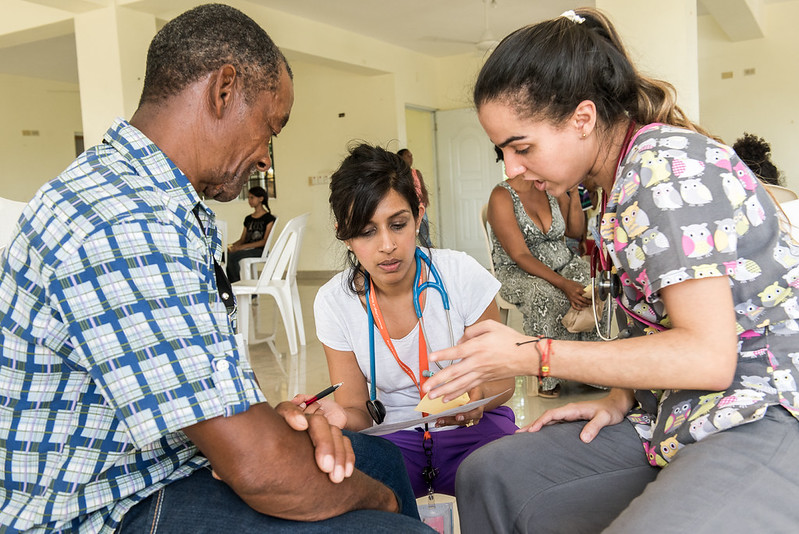
View this album on Flickr -
Hospital Medicine Track
Overview
The Hospital Medicine Track is a two-year longitudinal experience designed for residents interested in pursuing careers as hospitalists. The track provides additional training in inpatient medicine, acute care management, health care systems, and leadership within the hospital setting.
Through dedicated clinical and educational experiences, residents build skills that prepare them for the clinical, operational, and leadership responsibilities of a career in hospital medicine.
Eligibility
Residents will be enrolled in the track after their PGY-1 year. PGY-1 residents will have the opportunity to apply for the track in February of their PGY-1 year, selections will be made shortly after.
Track Outline
Residents receive dedicated time during the track to participate in focused hospital medicine experiences:
- PGY-2: One two-week dedicated block
- PGY-3: Two two-week dedicated blocks
During these blocks, residents gain additional clinical experience, work closely with faculty, and participate in a curriculum focused on topics relevant to a career in hospital medicine.
Curriculum
The curriculum combines focused clinical experiences, professional development, and scholarship. Residents work one-on-one with attending physicians on the Attending-Directed Service and Medicine Consults while completing a virtual curriculum focused on career development, health care economics, pain management, and withdrawal management. Residents also develop and complete a scholarly project related to hospital medicine over the course of the track.
-
Medical Education Track
Overview
The Medical Education Track is a two-year longitudinal experience designed for residents who are interested in developing their skills as medical educators.
The track provides hands-on teaching opportunities at both the graduate medical education (GME) and undergraduate medical education (UME) levels. Residents develop the skills needed to create effective learning environments for learners at all stages: from first-year medical students to senior residents. Through a variety of teaching experiences, track participants gain confidence teaching in diverse settings, including small-group teaching sessions, bedside teaching rounds and formal didactic lectures.
Track residents receive protected time that includes two separate two-week blocks during each year of matriculation. It is during those protected weeks that most teaching activities occur. There are some mandatory teaching activities that occur outside of the protected two week blocks. It is a track requirement that each resident develops a scholarly project supervised by an Attending physician mentor.
Mission
Our goal is to help residents become thoughtful, confident, and versatile educators who are prepared to incorporate teaching into their future careers in medicine.
Eligibility
Residents apply to the track during early Spring of their intern year and are notified of acceptance in late Spring. Prior medical education experience during medical school is not an application requirement. Residents begin matriculation in the track at the start of their PGY-2 year and continue through the end of their PGY-3 year.
Examples of teaching activities
- Lead resident Journal Club and Noon conference
- Prepare and deliver “mini chalk talks”
- Moderate departmental multidisciplinary Grand Rounds
- Partner with Attending physicians to teach pathophysiology to pre-clerkship medical students
- Lead simulation activities with third and fourth year medical students
- Moderate mock resident report with fourth year medical students
- Teach bedside Clinical Reasoning Rounds with third year medical student
- Participate in Clinical Bridges for fourth year medical students
Scholarly Activity
Scholarly activity is an integral component of the Medical Education Track. Each resident completes a mentored medical education project, with opportunities to develop, implement, evaluate and disseminate educational innovations.Our residents have led projects across a broad range of educational topics, including:
- Studying and publishing the impact of a Pass/Fail USMLE Step 1 on Step 2 Exam study time
- Implementing and assessing effectiveness of an ECG curriculum for third and fourth year medical students
- Designing resident focused rotation curriculum and objectives for hospital Observation Unit
- Designing and evaluating a resident and attending curriculum focused on effective feedback
- Optimizing an interactive resident curriculum on patient goals of care conversations
- Innovating a bedside rounding curriculum for medical students to facilitate their transition from the preclinical classroom learning to their third year clerkship
Residents have had an opportunity to evaluate the impact of these educational interventions using learner feedback, knowledge assessments or other educational outcomes. They have presented their medical education work at regional and national conferences and pursued publication in peer-reviewed journals.
-
Quality Improvement Track
Overview
The Rush Internal Medicine Residency Quality Improvement & Patient Safety Track is a two-year longitudinal experience designed for residents who are passionate about improving healthcare systems, advancing patient safety, and developing as future leaders in quality improvement.
More than a project, this track empowers residents to become leaders in our institution's culture of quality and safety. Working alongside experienced faculty mentors and hospital quality leaders, residents gain hands-on experience designing, implementing, and evaluating meaningful improvement initiatives that directly impact patient care.
Eligibility
Residents will be enrolled in the track after their PGY-1 year. PGY-1 residents will have the opportunity to apply for the track in February of their PGY-1 year, selections will be made shortly after.
Longitudinal Mentorship and Project Development
Beginning in the PGY-2 year, residents develop and implement a quality improvement project based on an area of clinical interest. Residents work closely with dedicated faculty mentors and have access to institutional resources including quality and safety leadership, data analytics, statistical support, and improvement science expertise.
Throughout the curriculum, residents learn practical quality improvement methodologies, including:
- Developing SMART aims
- Process mapping and workflow analysis
- Root cause analysis
- Measurement strategy and data interpretation
- Plan-Do-Study-Act (PDSA) cycles
- Designing sustainable interventions
- Effective presentation and dissemination of QI work
Projects are designed to improve patient care while fulfilling the residency scholarly activity requirement, with many leading to presentations at regional and national meetings and publication in peer-reviewed journals.
Resident Leaders in Quality & Patient Safety
QI Track residents play an active leadership role within the residency and health system. Residents organize and facilitate:
- Safety event review for bi-monthly Medicine Quality Assurance Committee meetings.
- Monthly multidisciplinary Morbidity & Mortality Conferences focused on systems-based learning and quality improvement.
- Quarterly Patient Safety Conferences highlighting institutional safety events, event reviews, and lessons learned across the organization.
- Educational sessions that promote a culture of continuous improvement and patient safety throughout the residency program.
Through these experiences, residents develop skills in systems thinking, facilitation, multidisciplinary collaboration, and leading organizational change.
Scholarship and Dissemination
Residents are encouraged to share their work beyond Rush. Many projects have resulted in peer-reviewed publications and have led to meaningful improvements in patient care, patient safety, hospital operations, and healthcare value. QI Track projects have been presented at:
- Rush University Medical Center Quality Improvement Fair
- Illinois Chapter of the American College of Physicians (ACP)
- Society of Hospital Medicine (SHM)
- Society of General Internal Medicine (SGIM)
- American College of Physicians Internal Medicine Meeting
- Other regional and national quality improvement conferences
Resident-Driven Quality Improvement
Our residents have led projects across a broad range of clinical and operational topics, including:
- Minimizing burnout among residents after ICU rotations
- Reducing unnecessary telemetry use
- Optimizing ICU to floor transition of care documentation
- Understanding religion in medicine as it pertains to patient care
- Optimizing inpatient oxygen utilization
- Antibiotic stewardship
- Reducing unnecessary PPE usage in the hospital
- Refining protocols for general inpatient hospice care
- Improving discharge communication and after-visit summaries
- Enhancing resident feedback processes
- Reducing unnecessary preoperative testing
- Increasing lung cancer screening rates
- Improving night float handoffs
- Reducing avoidable ICU admissions
- Establishing a post-code debriefing program
- Reducing unnecessary daily laboratory testing
- Optimizing inpatient hyperglycemia management and minimizing hypoglycemic events
- Advancing patient safety reporting and event review processes
Whether your career goals include hospital medicine, subspecialty practice, clinical informatics, healthcare administration, medical education, or academic medicine, the Quality Improvement & Patient Safety Track provides the mentorship, leadership experience, and scholarship opportunities to prepare you to become a future leader in healthcare improvement.
-
Primary Care and Geriatrics Track
Overview
The Primary Care-Geriatrics (PCG) Track is a two-year longitudinal curriculum integrated within the Internal Medicine Residency program at Rush. Beginning in PGY-2, the track provides comprehensive training in the clinical, academic, and policy dimensions of primary care. The program aims to prepare residents for a broad range of outpatient-focused careers in both academic and community settings by developing skills across diverse practice models, care delivery systems, and interprofessional collaborations.
Learning Objectives
- Train residents in the clinical, interpersonal, and systems-based skills necessary for excellent primary care.
- Expose residents to a wide range of care models (e.g., academic, community, concierge, FQHC, value-based care).
- Cultivate leadership and scholarship in outpatient medicine through longitudinal projects and academic deliverables.
- Provide pathways for career development in niche areas such as geriatrics, obesity/lifestyle medicine, informatics, sports medicine, and population health.
Eligibility
Residents will be enrolled in the track after their PGY-1 year. PGY-1 residents will have the opportunity to apply for the track in February of their PGY-1 year, selections will be made shortly after.
Curriculum
Residents in the Primary Care-Geriatrics Track receive additional ambulatory training designed to support their individual career interests and prepare them for careers in outpatient medicine.
During each Z-block, residents will participate in additional half-days of ambulatory clinic tailored to their future career goals. Each resident will be paired with a faculty attending who will serve as a longitudinal mentor throughout the track.
Residents will complete one dedicated PCG Track Z-block each academic year. During this block, residents will continue to attend regularly scheduled morning didactics and continuity clinics while participating in dedicated PCG clinics and a variety of interdisciplinary ambulatory experiences. These experiences include:
- Concierge medicine
- Podiatry
- Physical and occupational therapy
- Speech pathology
- Prosthetics
- Ambulatory care management
- Ambulatory pharmacy
PCG Track residents also receive priority scheduling for Z-block subspecialty clinics that provide core experiences for a future career in ambulatory medicine. Over the course of the track, all residents will complete rotations in:
- Dermatology
- Endocrinology
- Geriatrics
- Pulmonology
- Sports Medicine
Capstone Project
The capstone project will be a resident-designed scholarly project focused on primary care, geriatrics, population health, or systems improvement. Residents will work together with their PCG track mentor over the course of PGY-2 and PGY-3 to create a deliverable project. Ideas for capstone projects are listed below.
Example topics:
- "Pop health strategies for improving CRC screening rates in primary care"
- "Testing a digital tool to improve advanced care planning in primary care"
- "Pharmacist-driven strategies for treating hepatitis C in primary care"
- "Testing a HTN medication titration protocol in primary care
Encouraged scholarly products related to the project:
- IM and/or GIM Grand Rounds Presentation
- Abstract submission to regional/national conferences (SGIM, ACP, AGS, etc.)
- Publication of a brief report, letter, or manuscript in a peer-reviewed journal