
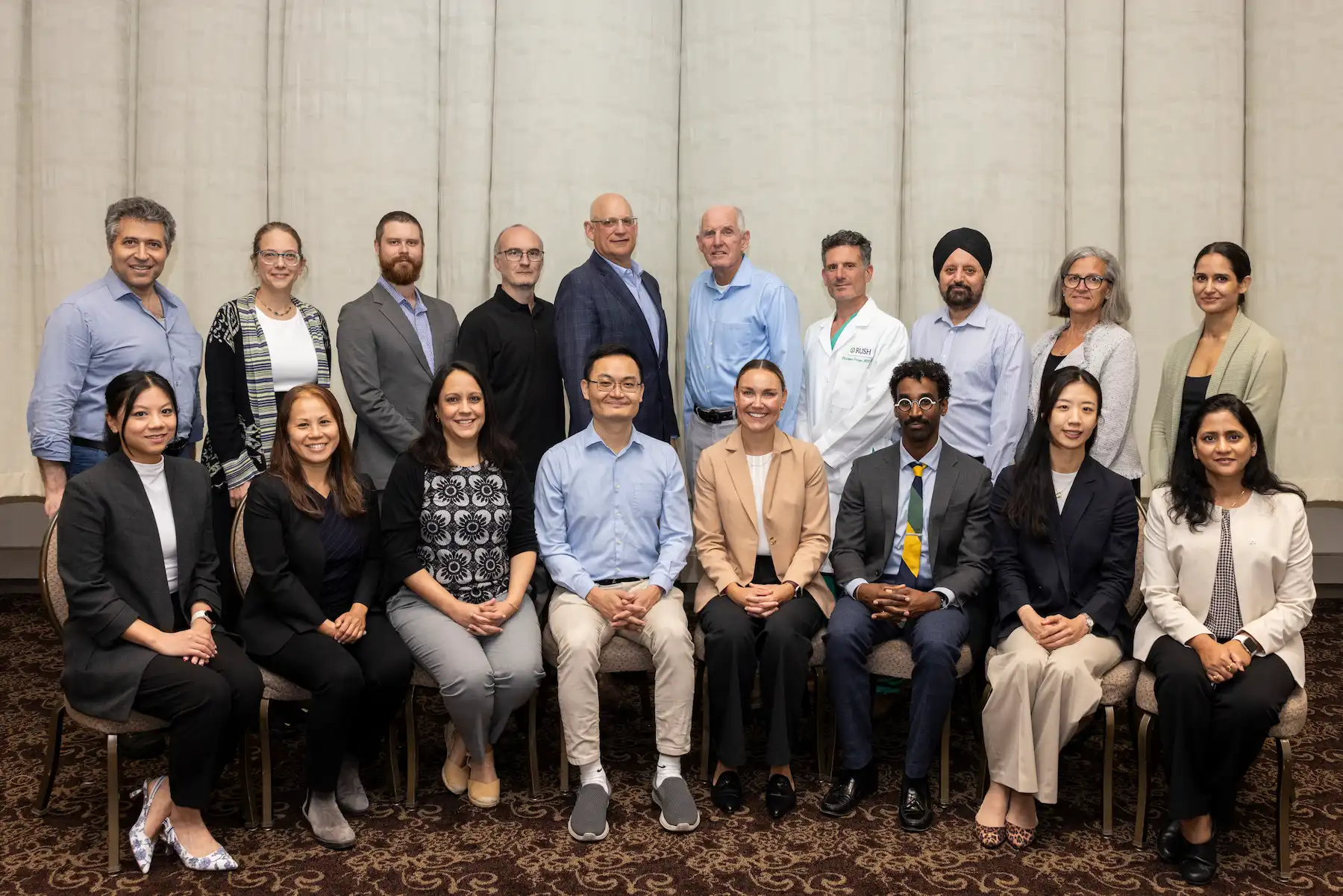
Every year, the Cohn Family Foundation provides grant funding to support junior faculty at RUSH University who are mentees in the RUSH Research Mentoring Program.
The Cohn Fellowship allows mentees to gather preliminary data for research proposals and continue their research activities.
Class of 2027 Cohn Fellows
The following faculty members were selected as the Class of 2027 Cohn Fellows after a very competitive process.
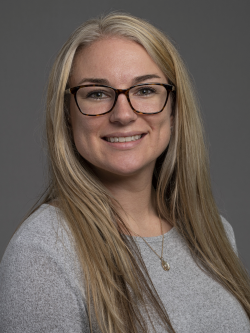
Brittany M. Wilson, PhD, is an Assistant Professor in the Department of Anatomy & Cell Biology at Rush Medical College. Her research focuses on musculoskeletal outcomes associated with disruptions in fetal development and preterm birth. Utilizing a combination of translational animal models and human tissues, along with advanced skeletal imaging modalities and measurement techniques, Wilson aims to deeply characterize bone development and mineral metabolism after preterm birth and other early life development disruptions.
The major goals of this Cohn Fellowship project are to improve the understanding and management of bone mineral balance during early postnatal life after preterm birth and determine if stable Ca isotopes are useful in diagnosing and monitoring metabolic bone disease of prematurity in infants.
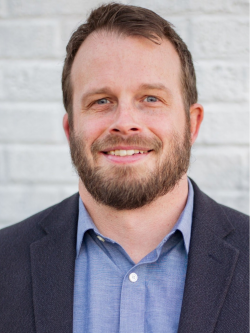
John Martin, PhD, is an Assistant Professor in the Department of Orthopedic Surgery at Rush University Medical Center. He is an engineer by training and over the past 15 years has studied degeneration, regeneration, and physical function of the musculoskeletal system, primarily the spine. His early work in regenerative medicine included developing injectable therapies and engineered tissues to improve or replace the intervertebral disc of the lumbar spine, a tissue that naturally degenerates with age and is implicated in low back pain. To monitor regeneration, his work progressed to developing in vivo imaging tools to quantify soft tissue structure, composition, function, and physiology. Dr. Martin has developed expertise in human MRI, CT, and PET imaging analyses and built data science tools to link imaging information with patient factors. As faculty at Rush University, Dr. Martin’s research group takes a holistic approach to low back pain by integrating the drivers of spine disease with the circumstances of the patient, from degenerative disc disease to the social determinants of health.
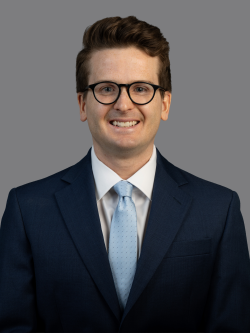
Kevin Buell, MBBS, MS, is an Assistant Professor in the Department of Internal Medicine, Division of Pulmonary, Critical Care and Sleep Medicine at Rush University Medical Center. His research aims to individualize and improve care for critically ill patients. As a steering member of the Common Longitudinal ICU data Format (CLIF) consortium, he uses a federated approach across 10 U.S. health centers to apply novel biostatistical, data science, and machine learning techniques to large, nationally representative observational data from the electronic health record and to study associations between care variations and patient outcomes. By conducting prospective, randomized, pragmatic clinical trials, he also identifies the definitive causal effect of care variations on patient outcomes. His research areas include antimicrobial stewardship, bag-mask ventilation, tracheal intubation, and mechanical ventilation.
In this proposal, Dr. Buell will quantify the variability and determinants that drive broad-spectrum antibiotic use and prevent antibiotic de-escalation. By defining patient, clinician, and geographic contributions to broad-spectrum antibiotic use and de-escalation, this research will help shift antimicrobial stewardship from a one-size-fits-all approach toward data-driven interventions grounded in objective measures of antibiotic “broadness”. This work will identify key predictors of broad-spectrum antibiotic use and de-escalation, which will subsequently be used to develop and validate real-time clinical decision support tools that incorporate data on dynamic patient trajectories, clinician prescribing patterns, and ICU culture.
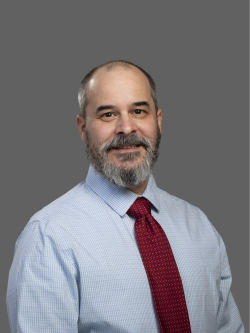
Philip Malloy PT, PhD, is an Assistant Professor in the Department of Physical Medicine and Rehabilitation and Department of Orthopedic Surgery at Rush University Medical Center. He serves as the Director of the Movement and Applied Rehabilitation Science Laboratory. His research focuses on understanding the biomechanical factors that may contribute to symptom development or can become altered in people with femoroacetabular impingement syndrome (FAIS). His long-term research goal is to use human movement biomechanical data to inform rehabilitation treatment progressions for patients electing both non-operative and operative interventions for FAIS.
His Cohn Fellowship will longitudinally assess changes in biomechanics during postoperative rehabilitation in patients with FAIS following hip arthroscopic surgery. This research will build on his prior longitudinal work that measured patients between 6-12 months after surgery by assessing patients at early (≤ 3 months) postoperative time points, which is when patients are still receiving postoperative rehabilitation. This work will also implement a battery of standardized clinical movement tests to promote clinical translation to rehabilitation treatment progressions after hip surgery for FAIS. Ultimately, this Cohn Fellowship will provide the necessary foundational data for a future rehabilitation intervention clinical trial in people with FAIS.
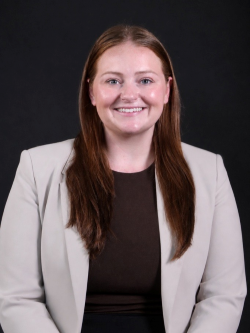
Samantha Addante, PhD, is an Assistant Professor and Licensed Clinical Psychologist in the Department of Psychiatry and Behavioral Sciences at Rush University Medical Center. Her research focuses on developing and implementing service delivery models to improve identification and treatment of perinatal posttraumatic stress disorder (PPTSD), with an emphasis on translating evidence-based trauma interventions into real-world obstetric and community settings.
Her Cohn Fellowship project centers on developing and testing an integrated care model designed to embed PPTSD screening, referral pathways, and evidence-based trauma treatment into OB clinics. Through stakeholder engagement and implementation science methods, this work aims to identify barriers to care and pilot strategies that improve uptake of trauma-focused services during pregnancy and postpartum. This research will generate critical preliminary data to support scalable, sustainable approaches to perinatal mental health care, with the long-term goal of improving maternal mental health and reducing intergenerational impacts of trauma.
Class of 2026 Cohn Fellows
The following faculty members were selected as the Class of 2026 Cohn Fellows after a very competitive process.

Ahmed Babiker, MBBS, MSc, FIDSA, is an Assistant Professor in the Department of Internal Medicine, Division of Infectious Diseases in Rush Medical College. The overarching theme of his research is utilizing -omics techniques to directly address challenges posed by antimicrobial resistance. His research interests include the clinical and molecular epidemiology antimicrobial resistance organisms, the surveillance of antimicrobial resistance in low- and middle-income settings and the role of the gastrointestinal microbiome in colonization resistance.
His Cohn fellowship research will leverage a unique dataset of sequenced multidrug resistant organisms and associated epidemiological metadata, collected from asymptomatic carriers in both hospitals and community settings in low- and middle-income countries to identify the bacterial lineages and plasmids that serve as global reservoirs for efficient antimicrobial gene transmission. This integrated analysis will provide a high-resolution picture of antimicrobial resistance transmission in community and healthcare networks on a global scale and be an important step towards identifying drivers and risk factors for antimicrobial spread in low- and middle incomes settings. This will ultimately guide the design of synergistic one-health multisectoral tailored interventions for the containment of antimicrobial.

Lourdes Carolina Figueroa, PhD, is an Assistant Professor in the Department of Physiology and Biophysics. Her research focuses on understanding the mechanisms that control calcium signals in the excitation-contraction coupling of skeletal muscle. Dr. Figueroa earned her PhD in Biophysics in Venezuela, where she studied the postnatal development of calcium homeostasis in skeletal muscle. During her postdoctoral studies at Rush University, she gained expertise in using advanced fluorescent microscopy techniques to quantify calcium dynamics in muscle cells. As an Instructor, she developed a platform using patient-derived skeletal cells to study and characterize calcium channel (RyR1) mutants associated with muscle disorders, such as Malignant Hyperthermia and Central Core Disease.
Recently, she has identified several small RyR1 inhibitors that specifically target the abnormal activity of the channel (i.e., due to genetic variants or post-translational modifications) without affecting its normal function, which is very attractive for therapeutic use. For her Cohn Fellowship, Figueroa will investigate the decline in muscle function associated with aging and evaluate the efficacy of these novel drugs in this context. Her research will contribute to our understanding of the mechanisms of muscle function loss with age and the search for interventions that improve the quality of life of our older adults.

Rachel Medernach, MD, MSCI, is an Assistant Professor in the Department of Internal Medicine, Division of Infectious Diseases in the Rush Medical College. Her research focuses on understanding how multidrug-resistant organisms persist in healthcare environments and developing strategies to prevent their infectious potential and spread throughout facilities.
Her Cohn Fellowship will investigate a continuously active disinfectant against high-priority pathogens including carbapenemase-producing Klebsiella pneumoniae and E. Coli on environmental surface materials found throughout the healthcare environment in a laboratory setting, with the long-term goal of applying the in vitro findings to real-world healthcare settings.
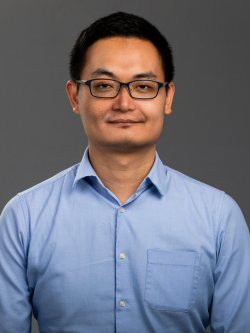
Ted K.S. Ng, PhD, is an Assistant Professor at the Rush Institute for Healthy Aging, Department of Internal Medicine, Rush Medical College. His research integrates psychosocial stressors, biological markers, and cognitive outcomes to better understand Alzheimer’s disease risk, particularly among diverse community-dwelling populations. Grounded in a biopsychosocial framework, his long-term goal is to translate epidemiologic insights into precision prevention strategies for populations at elevated risk.
Dr. Ng’s Cohn Fellowship research will pilot a Stage I randomized controlled trial (RCT) of the Mindful Awareness Practice (MAP), a mindfulness intervention tailored for individuals with mild cognitive impairment (MCI), a preclinical stage of Alzheimer’s disease. Building on promising results from a proof-of-concept RCT in Singapore, this study will test whether MAP improves mindfulness, breathing regulation, and reduces perceived stress and related biomarkers—ultimately enhancing cognition, mood, and quality of life (QoL). Findings will inform a fully powered Stage III trial, with the long-term goal of establishing MAP as a feasible, acceptable, and low-risk intervention for improving mental and cognitive health in MCI populations at high risk for Alzheimer’s Disease.
If you are interested in applying for the Cohn Fellowship next year, email us at mentoringprograms@rush.edu.