
This year, Rush University will celebrate its 54th Commencement Ceremony at Credit Union 1 Arena on May 2. The event will celebrate over 700 graduates as they take the next step in their professional careers.
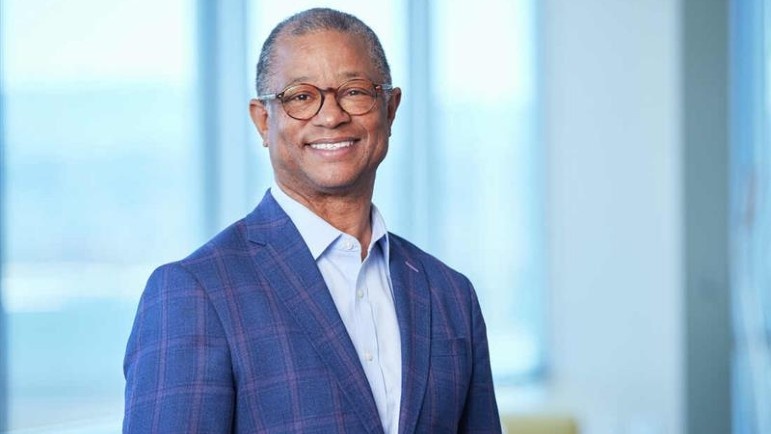
Rush University is honored to host Ted Love, MD, immediate past chair, BIO and former CEO, GBT, as this year’s commencement speaker. Love has been a visionary in the biopharmaceutical industry. During his time as president and CEO of Global Blood Therapeutics (GBT), he led GBT from a pre-clinical start-up into a multi-national commercial business and introduced the first innovative rationally designed, disease-modifying treatment for sickle cell disease.
We talked to Love about his career path, the impact our graduating students can make and what it takes for someone’s work to be successful, meaningful and a driver for innovation.
What advice would you give to graduates about becoming a leader in health care as they move forward in their careers? What skills make an impactful leader?
The number one thing I would encourage people to do is follow their passions. I've met many people in life who are extremely successful but they were not doing what they wanted to do, and as a consequence they were not as fulfilled. And I've met, by the same token, many people who have not been that successful by external metrics but they are phenomenally happy and fulfilled by their career. I put that over a lot of the things a career is measured, by being satisfied every day with what you do.
In terms of important skills, one that sticks out is to be a great team player. I've always been a sports guy – both playing and watching. I’ve likened my career to a lot of the great athletes that I've admired, where the focus is not on you. The focus is on something much bigger than you.
For me, it has always been about the mission. As humans, our selfishness can get in the way, we must stay focused on the big picture, on the mission. If you are an athlete, whether you scored that day, it's really not relevant. Did the team win? That’s the important part.
What’s a piece of career advice you received that stuck with you throughout your journey?
There are two pieces of advice that relate to each other. The first is to always be prepared. Early in my career, I learned very quickly that the people in the room that were likely to be the most impactful were highly prepared. I have focused on being as prepared as anyone in the room and that has been very useful.
The second piece of advice I learned in medical school is that saying “I don't know” can sometimes be the best answer. It's very hard for people who think they're expected to know all the answers to say they don’t have an answer. It is important to be honest and genuine rather than giving an answer that may not be fully true or correct.
As our graduates get set to embark on their next steps, how did your own career path evolve, and what advice do you have for embracing uncertainty?
My career was largely unplanned, or I could almost say completely unplanned.
Biotechnology did not exist when I graduated from medical school. Around that time though, we were developing the technical capacity to manipulate DNA and engineer cells to make human proteins. This set the stage for creating Genentech, the world’s first biotechnology company.
As biotechnology was beginning, my career interest was to be a physician. I grew up a very poor kid on a farm in Alabama. I loved school. I loved math. I loved science. I wanted to do something with my passion and to try to be like the most respected person in my community, which was the local black family physician. I thought I would be an internist, providing medical care to people in underserved communities in Alabama, like the one I grew up in.
Of course, we know I deviated further and further from that path but that’s the path that I started out on when I attended Yale.
Yale was an academic institution which wasn't something that I even knew about as a kid. I ended up meeting people who were physicians, but also academics. They were more focused on generating tomorrow's advances, tomorrow's medicines and tomorrow's treatments. This was completely novel to me, and I found it very intellectually exciting.
I began to be pushed to think about, well, maybe being an academic, maybe a leader in medicine is where my skill sets better aligned. After my residency at Mass General Hospital, I ended up going into a laboratory with a leader in cardiology, Dr. Ed Haber. He is probably the smartest individual I've ever worked with in my life. Working with him completely changed my mind about what I could do as a scientist, as an innovator.
At that point I was very much on a track which was unlikely to land me back in Alabama, but in a profession where I would still be contributing. I decided to leave Harvard and join Genentech.
Joining Genentech was a great decision, and my early career moves prepared me well for a biotechnology career. However, it was pure serendipity that my academic focus prepared me so well for what I’ve ultimately done.
So today I advise young people that “luck is what happens when opportunity meets preparation.” If you're not prepared when opportunity comes your way, you will not capture it and may see yourself as unlucky. In others words, you can’t make yourself lucky, but you can make yourself well trained and well prepared.
You’ve worked to develop treatments for diseases like sickle cell disease. What has that work taught you about the human side of scientific innovation? Is there a moment in your career that sticks out to you?
I would say there are many. Global Blood Therapeutics was the highlight of my career.
Very early on in GBT, we were very clear on the mission and that mission was the patient.
The sad situation that sickle cell patients face is the lack of therapies, the lack of research funding into their disease and the lack of financial support for their care. There has been underinvestment in this disease and the patients know it. We were very intent on making it extraordinarily clear that we were out to change things, and it wasn't just making medicine. It was to support the community, to march with them. And we did just that.
I remember before we even had a molecule in the clinic, I was at a meeting in Los Angeles, and my company purchased some water bottles because sickle cell patients need to stay hydrated. We provided these nice water bottles and blankets because sickle cell patients often get a little cold. Again, we had no drug yet but this was just us trying to say, “we've got a company and we want to know this community extremely well because we want to do everything right.”
During this meeting, a young gentleman walked up to me and told me about his experience of having sickle cell disease. He told me “I felt like the health care system was just waiting for me to die. And today, with your company and what you guys are doing, has given me hope. That somebody really cares about me and somebody is really focused on fixing this problem that I was born with.”
When we conducted our first study at Guy's Hospital in London, it went extremely well and the data was extremely exciting. We decided to have a party for everyone who helped us during the study.
We invited all the investigators, all of the clinical coordinators, a bunch of people from GBT that had been involved in doing the study and all of the patients and their families.
During that evening, a man in his 40s or 50s came up to me and told me that it was an honor to be involved in the study. Not for himself but for the hope that it could one day help his daughter.
That is what it was all about. I would tell these stories to other employees because I really wanted them to know this was our mission. This is what we were working on. This was the why.
The company was authentic. Yes, we were a corporation, but we were a collection of humans first. We were so excited to contribute as much as we could. It was an exceptional experience and the capstone of my career.
What advice you can give to our graduates? How can they ensure that their careers are not just successful but meaningful? And where do you think they can have the biggest impact today?
When I agreed to take the job at GBT I said to the venture group that had started the company and recruited me, that I want GBT to be my epitaph.
I would encourage young people to pause every once in a while and think about what you want your life to mean, what you want your career to mean. I don't think we always do that. I think we typically rush from one milestone to the other. I would encourage people to try to pause and think “what will my epitaph say.”
The other bit of advice is to live your life in thirds.
The first third of your life should be focused on self-development, being very selfish about your education, your training, your skills. The second third of your life is unleashing all that preparation, all that training, all that skill development. Then you can spend the last third of your life dedicated to philanthropy, giving back to people that are following you in their careers, giving to others that need help.
Those are the two things I would say. Pausing and thinking about what you would want your epitaph to say and living your life in thirds.