
The nursing profession stands at a crossroads. A looming faculty shortage threatens to exacerbate an already critical need for nurses, while specialized areas like clinical research and nurse anesthesia face their own workforce challenges. Rising education costs create additional barriers for students seeking advanced degrees, potentially limiting the pipeline of future nursing leaders.
Recognizing these interconnected challenges, Rush University College of Nursing has launched three innovative programs designed to strategically address gaps in nursing education and workforce development. Each initiative targets a specific challenge while contributing to a broader vision of strengthening the nursing profession.
Addressing the faculty crisis
The statistics are sobering: A significant number of nursing faculty are nearing retirement, and the profession isn’t doing enough to ensure a robust pipeline of future educators. Although there are efforts at both national and state levels to prepare more graduate-level nurses, many don’t receive the background in educational theory and practice needed to make a lasting impact in teaching roles.
“This is the time for bold, innovative strategies that bring our master’s and doctorally prepared nurses into the fold as educators,” said Frank Hicks, PhD, RN, CNE, associate dean for academic programs at the college. “When given the tools they need to be successful, I am confident nurses will answer the call to help educate the nurses of tomorrow.”
Rush’s solution is the Nurse Educator Certificate program, a five-course, 12-credit initiative designed to prepare experienced nurses to step confidently into teaching roles. The program gives nurses the skills, tools and perspective to thrive as educators in both academic and practice-based settings.
“We created this certificate because it allows nurses whose graduate work focused on advanced practice or research to build essential educator skills,” explained Jennifer B. Rousseau, DNP, WHNP-BC, CNE, FAWHONN, NEC program director. “They leave the program ready to guide and inspire the next generation of nurses.”
“This is the time for bold, innovative strategies that bring our master’s and doctorally prepared nurses into the fold as educators. I am confident nurses will answer the call to help educate the nurses of tomorrow.”
The program stands apart through its emphasis on culturally responsive pedagogy and health equity. Students learn to apply teaching strategies grounded in universal design for learning, while integrating topics like social determinants of learning, social justice and health equity throughout the curriculum. This approach ensures that new educators are prepared to teach diverse student populations effectively while addressing contemporary health care challenges.
Investing in specialized care
Nurse anesthesia represents one of nursing’s most demanding specialties, requiring extensive education and training. The financial burden can be prohibitive for many qualified candidates, creating potential shortages in this critical area of patient care.
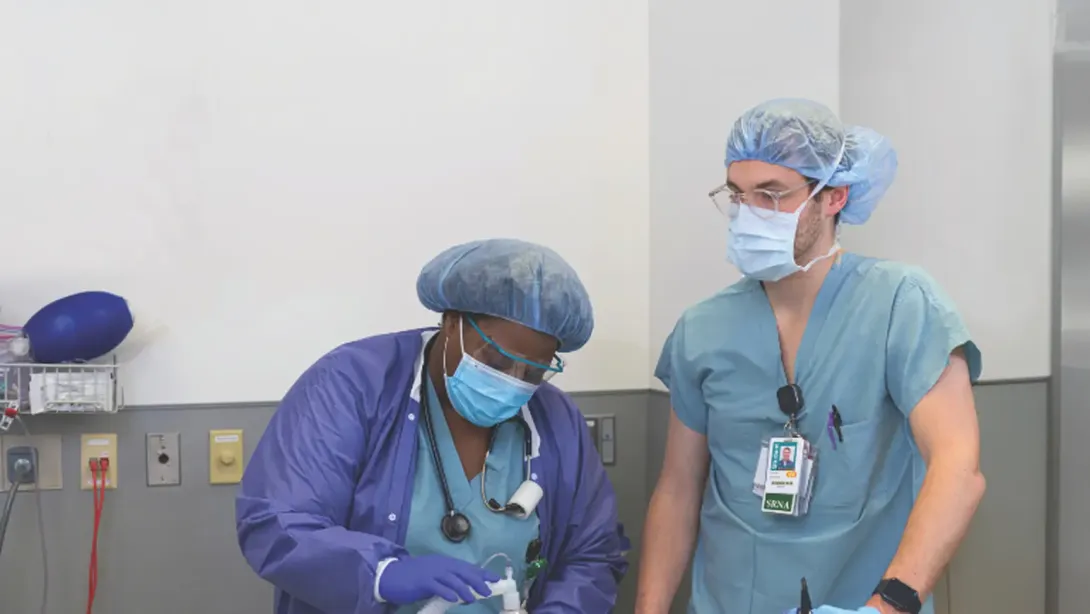
Rush has responded with an innovative tuition forgiveness program specifically for student registered nurse anesthetists enrolled in Rush’s nationally recognized program. The initiative covers full tuition costs in exchange for a commitment to practice at Rush after graduation.
“This program represents a strategic investment in ensuring we have the highly skilled CRNAs needed to provide exceptional patient care,” noted Maiko Yamashita, DNP, CRNA, track director for the CRNA program at Rush. “By removing financial barriers, we can attract and retain the best candidates while ensuring they’re prepared to serve our community’s needs.”
Beyond addressing immediate workforce needs, the program reflects Rush’s broader vision to develop nurse leaders who will advance the specialty. The two-year commitment allows new graduates to gain valuable experience in a supportive environment while contributing to Rush’s mission of providing exceptional patient care.
Expanding research opportunities
The growing complexity of clinical trials requires nurses with specialized knowledge in research methodology, regulatory compliance and participant care. Yet many qualified nurses lack formal training in clinical research management, limiting both career opportunities and the quality of research conducted.
“We recognized a significant gap between the demand for skilled clinical research nurses and the available educational pathways to develop these competencies,” explained Marie Statler, PhD, MSN, BSN, RN, assistant professor and faculty lead for the initiative. “This certificate program provides nurses with the specialized knowledge they need to excel in clinical trials while contributing to advances in patient care.”
The Principles of Clinical Research Management Certificate program, launching January 2026, offers four modules providing eight continuing education units. Designed for RNs working in or interested in clinical trials, the online program covers essential topics, including research ethics, regulatory requirements, data management and participant advocacy.
The program will initially launch for Rush employees before expanding to a national audience, reflecting Rush’s strategy of piloting innovations internally before broader implementation. This approach allows for refinement based on real-world feedback while ensuring Rush nurses have access to cutting-edge professional development opportunities.
“Clinical trials research is becoming increasingly important in health care delivery,” observed Christine M. Kennedy, PhD, RN, FAAN, the John L. and Helen Kellogg Dean of the College of Nursing. “By providing our nurses with specialized training in research management, we’re not only advancing their careers but also strengthening our capacity to conduct high-quality research that benefits patients everywhere.”
A coordinated response to complex challenges
These three initiatives reflect the College of Nursing’s innovative approach to addressing workforce challenges in nursing. Rather than treating each issue in isolation, the college has developed coordinated solutions that leverage the institution’s educational excellence and clinical expertise. Together, these programs demonstrate how academic medical centers can take the lead in addressing profession-wide challenges.