
What is it?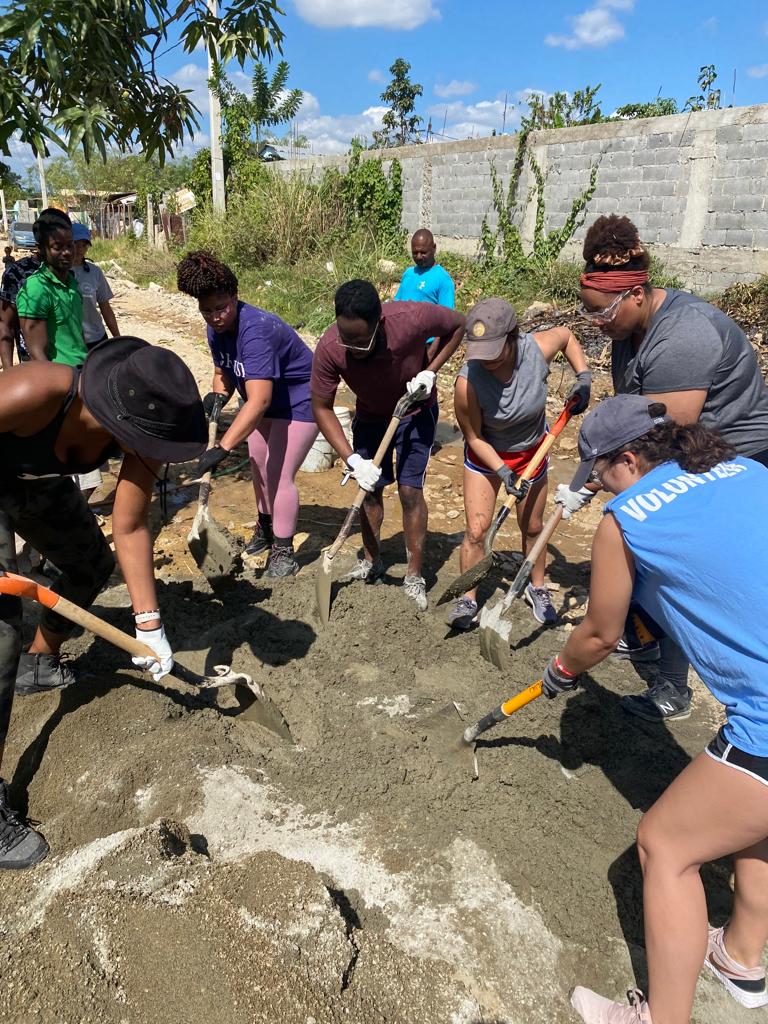
RISE is an Interdisciplinary Service-Learning Experience with a structured curriculum and scholarly focus. As of October 2026, RISE participants have built 28 new cement floors, built a home, and a playground for an orphanage.
Student expectations
- Work in collaboration with the community and their peers to complete a labor-intensive service project
- Have good team spirit and flexibility
- Be prepared for physical labor outside their daily practices; past projects include cementing floors for families in the community (ability to lift 30 pounds) Most work is done outdoors.
- Be prepared for a setting and daily living that may be outside their comfort zone
- Participate in brief didactic and curricular exposure to cultural competency and ethics prior to the service trips (approximately 10 hours)
- Complete an assigned write-up post experience
Community service project- will be multi-factorial in partnership with community members in a select city in the Dominican Republic. Details of what participants will do are to be determined. Past projects include cementing floors for family homes in the community, building a playground, and building a home.
Where is it?
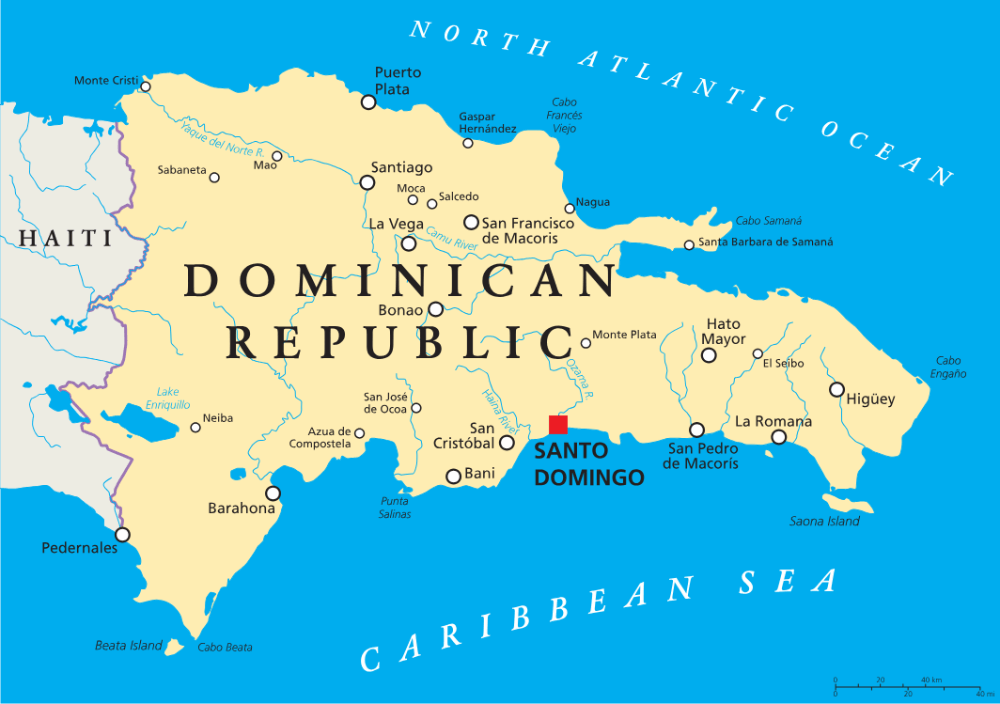
- Villa Verde, an established community outside of Santo Domingo, Dominican Republic or a new partner community in the Dominican Republic
When is it?
- University Spring Break: February 27-March 6, 2027
Who can participate?
Open to Rush Students
Cost of experience?
The cost for logistics, which includes program fee, accommodation, in country transport and food is $1450 with a $900 scholarship available to students. You are responsible for purchasing your own travel insurance. If your ability to participate is
affected by financial circumstances, please email
global_health@rush.edu to explore options.
Rush students work together with Villa Verde, Dominican Republic, community members to mix and lay cement on the floor of five local homes in a flood prone area. Studies show replacing dirt floors with cement improves physical health, cognitive function, and mental well-being.
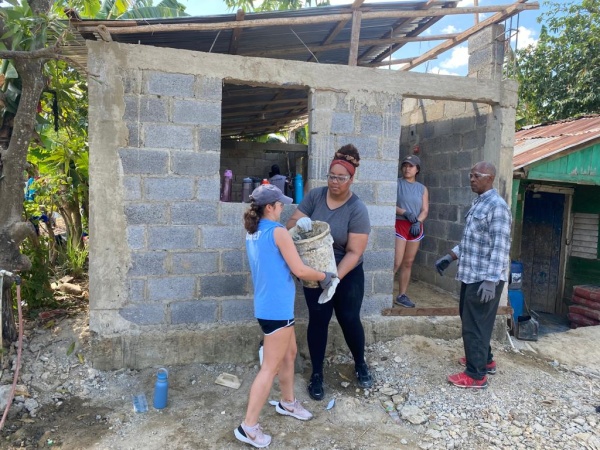
With local masons, cement workers and community volunteers, students cemented floors for five local families in Villa Verda, Dominican Republic. The community council chose five families considering age, health, income, and opportunity for alternate aid. Working with Community Empowerment local representatives, students stirred cement, filled buckets, poured and completed floors in five homes. Through this experience, students gained a deeper understanding of the perseverance of Dominican communities, multi-dimensional poverty and were able to impact the lives of multiple families.

Rush students and local community members line up in single file fashion to transport buckets of cement to pour upon the floors of community members' houses. Two lines are set up: buckets going in and those going out. This structure greatly expedited the process to fully cement floors and distributed the work amongst members.
-
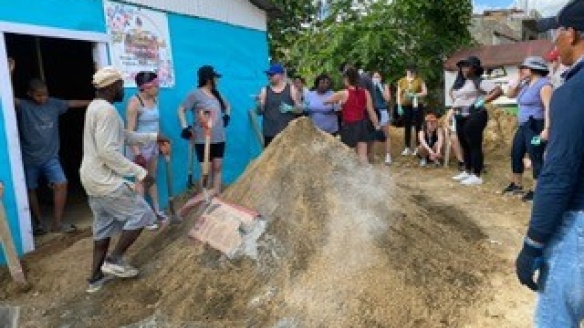 Step 1: Pile of concrete mix and dirt
 -
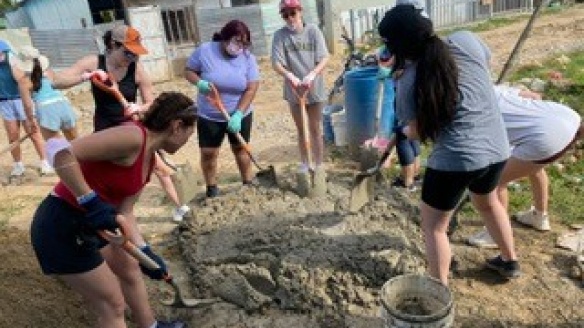 Step 2: Mix with water to make concrete
-
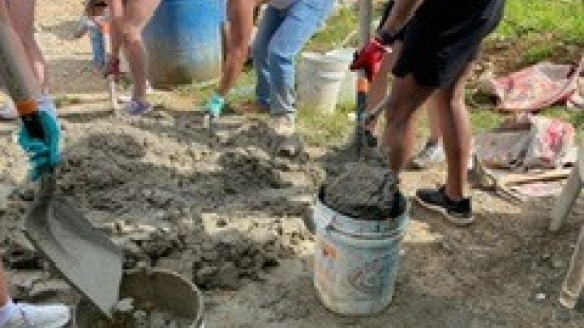 Step 3: Put concrete in buckets
 -
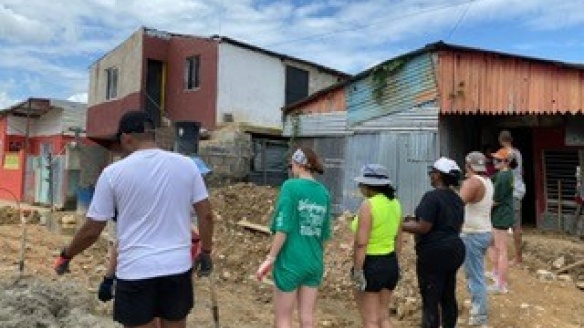 Step 4: Pass the buckets down the line