

About the College of Health Sciences
Since 1975, the College of Health Sciences has been responsible for education and research in the allied health professions. We seek to provide the growing health care industry with superb health practitioners, managers, researchers and leaders.
Rush University educational programs integrate patient care, research, scholarship and service in an academic medical center setting. They are among the very best in the nation, according to U.S. News & World Report’s Graduate School rankings.
Explore programs from the list below to get more information about admissions, tuition and everything you need to know to choose the healthcare career education path that’s right for you.
Find a College of Health Sciences Program

Programs within the College of Health Sciences have individual admissions requirements. Select your preferred program to find details on admissions for your specific area of study.


Several programs in the College of Health Sciences rank among the best in the U.S. according to U.S. News and World Report, including Health Systems Management and Audiology.

A major focus of the College of Health Sciences is the discovery of new knowledge through research. We believe that our research is impactful due to our multidisciplinary philosophy.

From building communities within our cohorts to serving our neighborhoods, we take pride in our outreach. Students give back through service at Rush and in the local, national and international communities.

Rush cultivates a welcoming and supportive atmosphere that encourages engagement from diverse students and faculty. You’ll find a sense of belonging among educators and fellow learners from all walks of life.

Health care impact starts at CHS.
From innovations in the classroom, to advancements in the lab, to improved health outcomes in the community. Go inside the College of Health Sciences with our annual magazine. Read the latest issue


-

After starting his career as a surgical technologist, Owen McKinley is earning his master’s in cardiovascular perfusion – and pursuing his passion for statistics at the same time
-
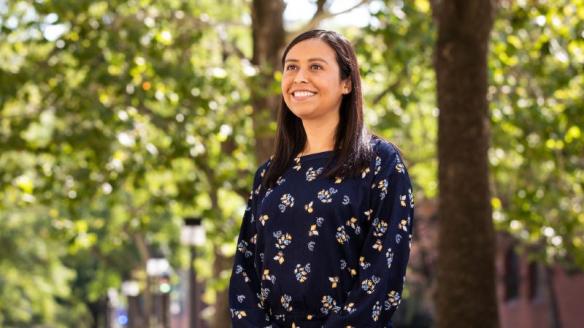 Laura Rios will never forget the day she learned that her work options would no longer be limited because of her citizenship status. Now, as an audiologist-in-training, Rios wants to help people clearly hear similarly life-changing news.
Armour Academic Center
600 S. Paulina St., Suite 1001
Chicago, IL 60612
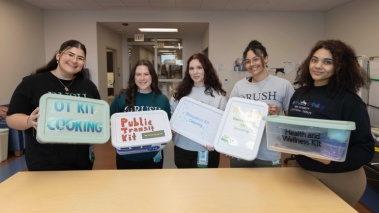 Students at Rush University ease the burden getting dressed, cleaning and other daily activities for people with neurological conditions through occupation kits
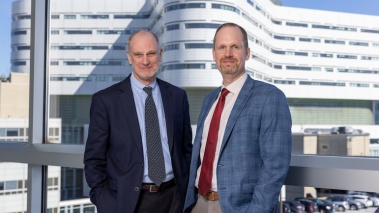 Rush University College of Health Sciences program is a national leader in advancing spiritual care through research
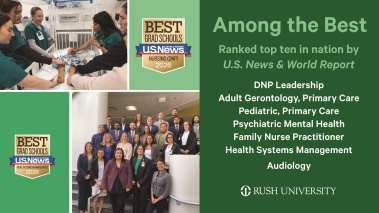 College of Nursing and College of Health Sciences see programs rank in top five nationally
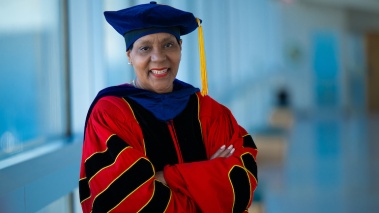 Diane Howard, PhD, MPH, FACHE, demonstrates a decades-long commitment to helping students find and pursue their passions
 Turner has served as interim dean since 2024, overseeing 10 academic departments and leading development of a five-year strategic plan
 Three students share how scholarship support empowers them to focus on their studies, pursue their passions and give back to their communities