
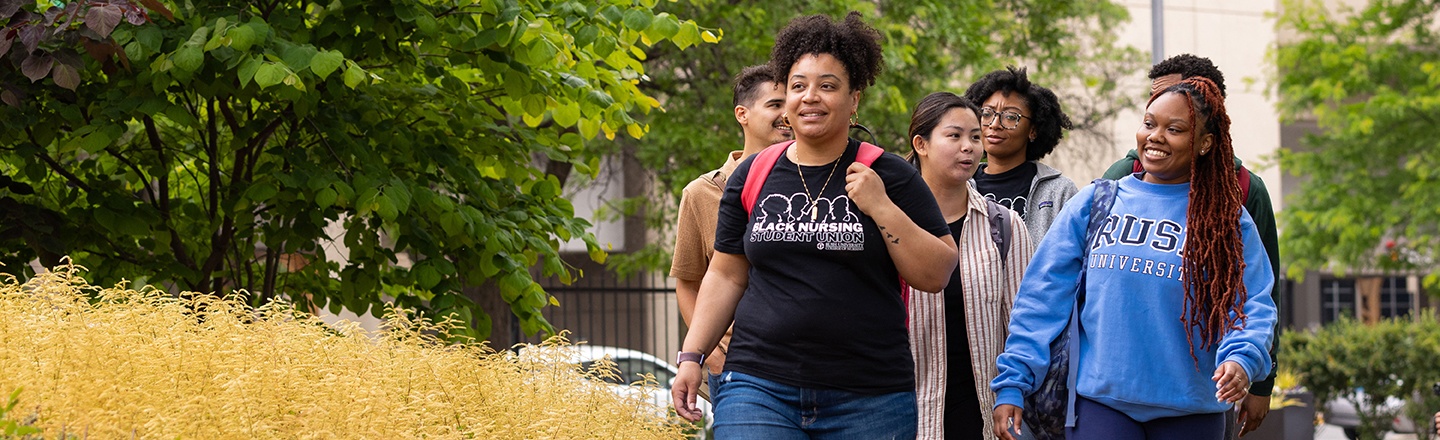
About the College of Nursing
The College of Nursing’s national reputation for clinical excellence helps make our graduates highly sought after by top health care employers around the country. Well over 7,000 baccalaureate, master’s and doctoral students have graduated from Rush University’s College of Nursing. Current nursing programs are offered from the master’s through the doctoral (DNP and PhD) levels. The generalist entry master’s (GEM) is the prelicensure program for entry into RN practice. Students are automatically members of the Rush-Presbyterian-St. Luke’s Nurses Alumni Association upon graduation.
- Our Mission: The mission of Rush University College of Nursing is to integrate nursing practice, scholarship, and education throughout the diverse communities we serve and to boldly lead health care transformation to ensure health equity across the continuum of care.
- Our Vision: Our vision is to lead nursing practice scholarship while driving health equity.
Explore programs from the list below to get more information about admissions, tuition and everything you need to know to choose the health care career education path that’s right for you.

See how our programs are evolving to align with the latest standards in nursing education and practice.
Find a College of Nursing Program
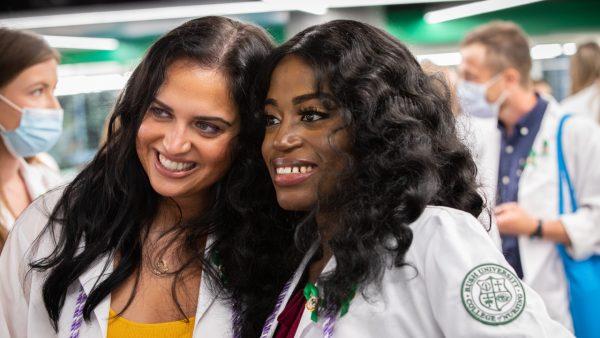
The College of Nursing uses a holistic admissions process. Find out more about admissions and information on how to apply for programs and financial aid, grants and scholarships.
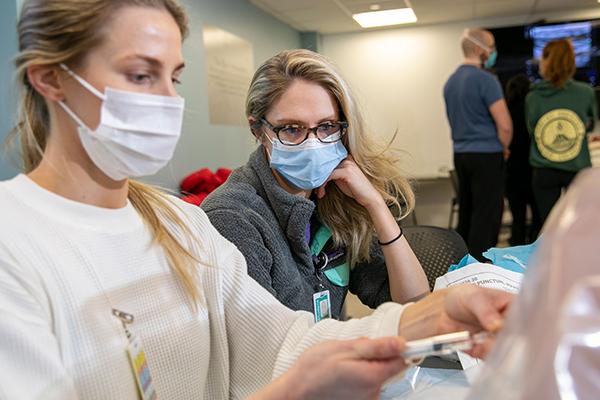

Rush University College of Nursing receives high rankings every year from U.S. News & World Report, reinforcing its national reputation for excellence in nursing education.

Forces that drive the College of Nursing to be a national leader in health care include our engaged faculty, quality online instruction options, personalized admissions process and more.

Rush is dedicated to providing students with a range of resources, grants, scholarships and loans to help pay for their education. The College of Nursing has dedicated merit scholarships for diverse and underrepresented students in nursing.

The Rush community strives to be an intentionally inclusive setting where students will thrive in learning, co-curricular and community experiences. Our values are reflected in the diversity of our faculty and student body.
Take a look at the rankings and honors that showcase our commitment to excellence in nursing education.
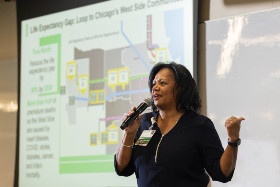
If improving lives drives your passion for nursing excellence, pursue it here as part of our nationally and internationally recognized team.
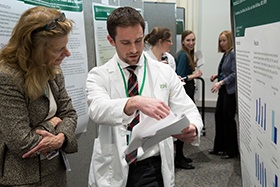
Our nurse researchers lead a range of multidisciplinary studies targeting the prevention and treatment of health problems at the bedside and in the community.”
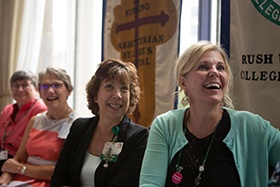
Our nursing college faculty are nationally and internationally known for their expertise, encompassing nursing education, practice and research
The College of Nursing's Faculty Practice delivers nursing services and direct care to diverse populations at more than 20 on sites across Chicago. One of these sites is a clinic at St. Leonard's Ministries. St. Leonard's provides formerly incarcerated men and women with housing, employment and educational services to help people transition back into the community. The Faculty Practice clinic manages health needs and fill gaps as St. Leonard's residents work toward establishing primary care providers for the time when they leave.
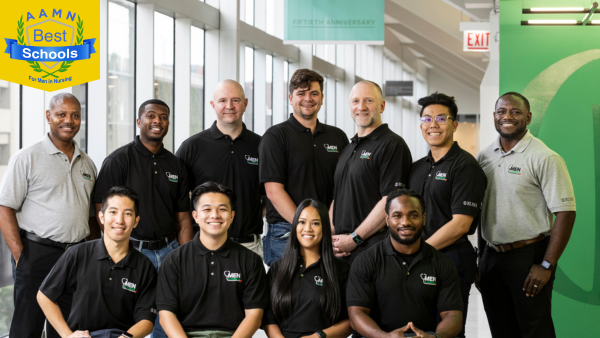
The College of Nursing is recognized for decades of dedication to the advancement of men in the nursing profession.
College of Nursing Magazines
Read stories from Rush nursing students, educators, clinicians and researchers in the latest edition of our annual magazine.

Nursing That Transforms - 2024
Building a mentorship and support organization for Black nursing students, staying ahead of the curve in preparing nurse anesthetists for leadership, and more news from Rush CON

Nursing That Transforms - 2023
A spotlight on men in nursing, a look at two new grants supporting students from diverse backgrounds practicing in underserved communities after graduation, and more

Nursing That Transforms - 2022
Hear how we're transforming health equity curriculum, how Rush is redefining what science and scholarship means in nursing, and how our students are prepared to tackle the changing landscape of health care
 NLN recognizes institutions that demonstrate sustained excellence, innovation and measurable impact in nursing education
 Kristie Coleman, PhD student, will join cohort of doctoral nursing students preparing to become the next generation of nursing leaders
 Lynn Mohr, PhD, APRN, awarded for commitment to serving and educating the future generation of nurses
 Students plan and implement projects to serve their communities
 Transformative gift expands access to care and services through investment in community clinics, resources, and education and training programs
 Students work to address health needs of underserved communities in Chicago
College of Nursing Administrative Office
Armour Academic Center
600 S. Paulina St., Suite 1080
Chicago, IL 60612
(312) 942-7117
Rush University Alumni Office
1201 W. Harrison St., Suite 300
Chicago, IL 60607
(312) 563-9058
alumni@rush.edu

Nearly 80% of our students rely on financial support. Our students are ready, and financial barriers shouldn’t hold them back. Your gift today helps turn their ambition into action, building a healthier tomorrow — one future nurse at a time.